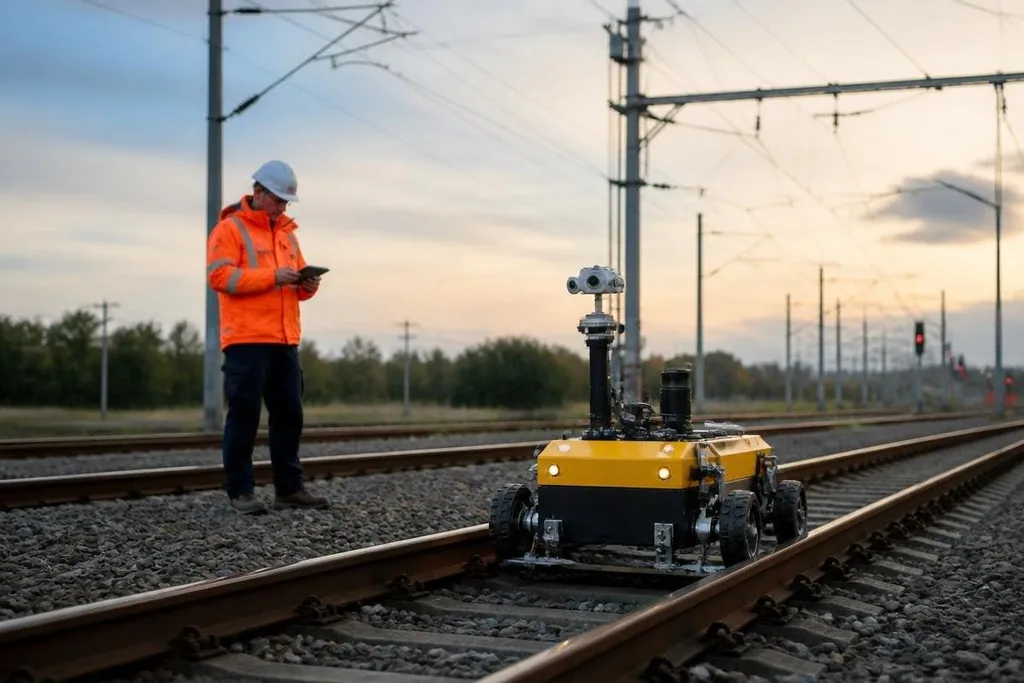
Railway robots will first earn their place on jobs that are slow, risky, or hard to inspect by hand. Track checks, tunnel surveys, and overhead-line work fit that pattern, but widespread use will depend on safe operation around trains and clear proof that the machines save time.
For railway managers, the useful question is practical: which jobs can a robot do without adding another layer of work?
- Robots will start with inspection and measurement tasks.
- Human teams will still make repair decisions and handle unusual faults.
- Approval, safety rules, and maintenance plans may take longer than the robot build.
Inspection comes before repair
A railway robot can carry cameras, LiDAR, thermal sensors, or ultrasonic equipment. Each tool checks a different part of the railway, from visible track damage to heat changes around electrical equipment.
That makes inspection the most likely starting point. The robot can move along a planned section, collect data, and flag areas for a human team to review.
It does not need to decide whether a rail is safe to keep in service. That decision still needs engineering rules, records, and people who understand the local railway.
The work also suits robots because the route is fixed. A machine can follow rails, travel through a tunnel, or move beside track using a known map. Its software still needs to cope with points, crossings, poor light, rain, ballast, and objects left near the line.
A test video won't answer those questions. Railway operators will need repeatable results across different weather, track layouts, and traffic conditions.
The hard part is working near trains
A railway robot shares space with a system that can move quickly and stop only after a long distance. That changes the design from a normal outdoor robot. Operators need clear rules for where the machine can work, how it leaves the track, and what happens when its sensors fail.
Remote control may handle early deployments. A person can watch the robot, stop it, and guide it through a task. That adds staff and a communications link, so the cost case depends on the work being safer or faster than sending a crew into the same area.
Fully autonomous operation may come later, and only on routes where the robot can locate itself with enough confidence. A lost position near live railway traffic is a safety problem, not a small software fault.
The useful record starts with the route: a railway robotics report on Robot 24 can name the task, test date, and result. Those details separate a controlled demonstration from a robot that has worked during regular railway operations.
Repair robots will need more than mobility
Inspection is one task. Repair is another. A repair robot needs to carry tools, apply the right force, hold its position, and leave a clear record of the work completed.
Track maintenance could include fastening checks, surface cleaning, measurement, or small repairs. Overhead-line work brings another set of demands, including electrical safety, reach, and accurate movement near cables. Tunnel work may require lighting, dust control, and reliable communications.
Each job will likely need its own robot or tool system. A machine built to measure rail geometry may have little use for lifting equipment or fixing a cable. That limits the value of a general-purpose design unless the railway has enough similar tasks to keep it busy.
The cost question also goes beyond the purchase price. Operators will need spare parts, software updates, trained staff, recovery plans, and a way to check sensor data. A robot that saves one night of track access but needs a specialist team every week may not save money.
A practical test for railway operators
Before buying a railway robot, a manager should check the job rather than the machine’s broad promise.
- Name the task: record the exact inspection or repair, its location, and how often it happens.
- Set the human baseline: measure crew hours, track access time, travel, and reported safety exposure.
- Define failure actions: specify how the robot stops, exits the track, and gets recovered.
- Check the data: decide who reviews the readings and how they enter the railway’s maintenance records.
- Run repeated trials: test the same job in poor light, wet weather, and across more than one track section.
- Set a buying rule: continue only if the measured result beats the human baseline without adding unsafe work.
Railway robots will grow through narrow jobs with clear measurements, not broad claims about autonomous railways. I'd wait for operators to publish repeatable results on safety, inspection accuracy, recovery time, and cost before treating any system as ready for routine work.
The next useful proof is simple: a robot completing the same railway task through a full maintenance cycle, with its failures and human support recorded.